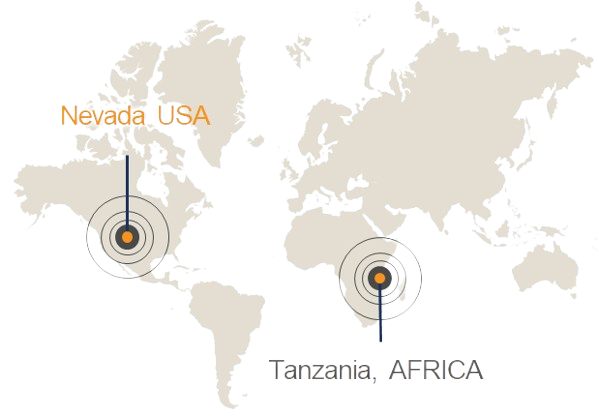
Cameo Resources has a signed LOI to acquire acquired 51% interest in the Katoro Gold Properties within the Lake Victoria Goldfields in northwest Tanzania.
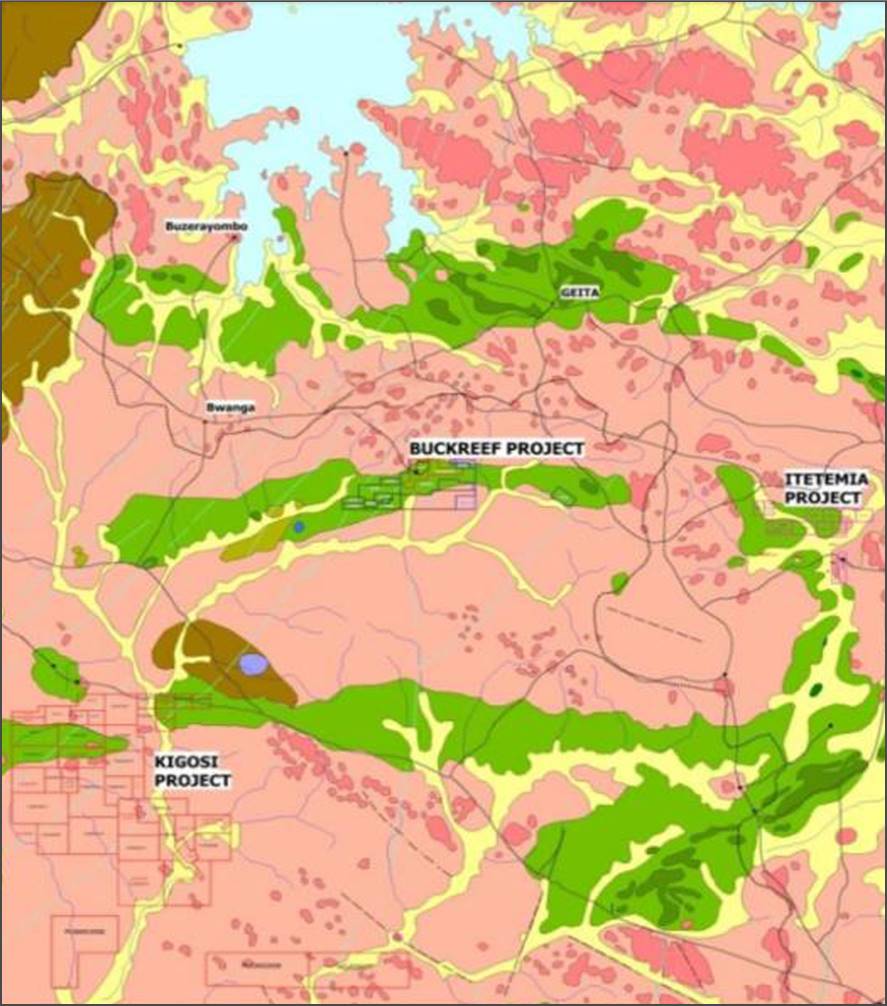
The Katoro Gold Property is comprised of 12.52 km2 road accessible properties, approximately 170 km southwest of Mwanza city, 63 km southwest of Geita Region. It is Located within the Sukumaland Greenstone Belt (“SGB”) home for the Buckreef mine along the same strike within Katoro, within the Lake Victoria Goldfields.
Regional geophysical and structural settings suggest an exploration potential for significant gold mineralization within the project areas.
Regional geophysical and structural settings suggest an exploration potential for significant gold mineralization within the project areas.
The Katoro Gold prospect offers the potential for two very timely exploration upsides:
First, through Immediate access to epi-mesothermal zone of higher-grade gold mineralization in quartz veins from surface;
Second, much broader underexplored potential for a buried porphyry structure.
Katoro Gold Properties
Geology
The Katoro Gold concessions have been mined by artisanal miners for some time, evidenced by the multiple shallow pits and trenches showing iron carbonate altered mafic volcanics (basalts) and quartz feldspar porphyry intrusions.
Gold is associated with grey quartz veins and stringers that exhibit a pinch and swell characteristic, parallel to the fabric of east-west shear zones.
Lake Victoria Gold Fields (LVGF)
A Significant Gold Producing Region
The Lake Victoria Goldfields (LVGF) in Tanzania is a key gold-producing area within the Tanzania Craton, featuring Neoarchaean greenstone belts like Sukumaland and Musoma-Mara, home to major mines such as Geita and Bulyanhulu.
As Africa’s third-largest gold producer, Tanzania relies heavily on the LVGF for its ~50-tonne annual output. The region’s geology, with gold-rich quartz veins and shear zones, supports both large-scale and artisanal mining, boasting over 44 million ounces of reserves and ~50 million ounces in resources.
Emerging projects like Buckreef and Nyanzaga highlight untapped potential in underexplored belts and deeper zones, cementing LVGF’s role in Tanzania’s gold industry and future production.
At present, The LVGF area hosts ongoing operations by some of the largest gold companies in the world and include current activities by TRX Gold Corporation (TSX:TRX), AngloGold Ashanti plc (NYSE:AU), and IAMGOLD Corporation (TSX:IMG).
Katoro Gold Properties
Geology
The Katoro Gold concessions have been mined by artisanal miners for some time, evidenced by the multiple shallow pits and trenches showing iron carbonate altered mafic volcanics (basalts) and quartz feldspar porphyry intrusions.
Gold is associated with grey quartz veins and stringers that exhibit a pinch and swell characteristic, parallel to the fabric of east-west shear zones.
Bonnie Claire East Lithium Property
Nevada, USA
The Bonnie Claire East property includes twenty 20-acre placer claims (ACE 1-20), located Jan. 25, 2020, and nineteen 20-acre lode claims (BCE 1-19), re-staked Apr. 12, 2023, covering about 447 acres.
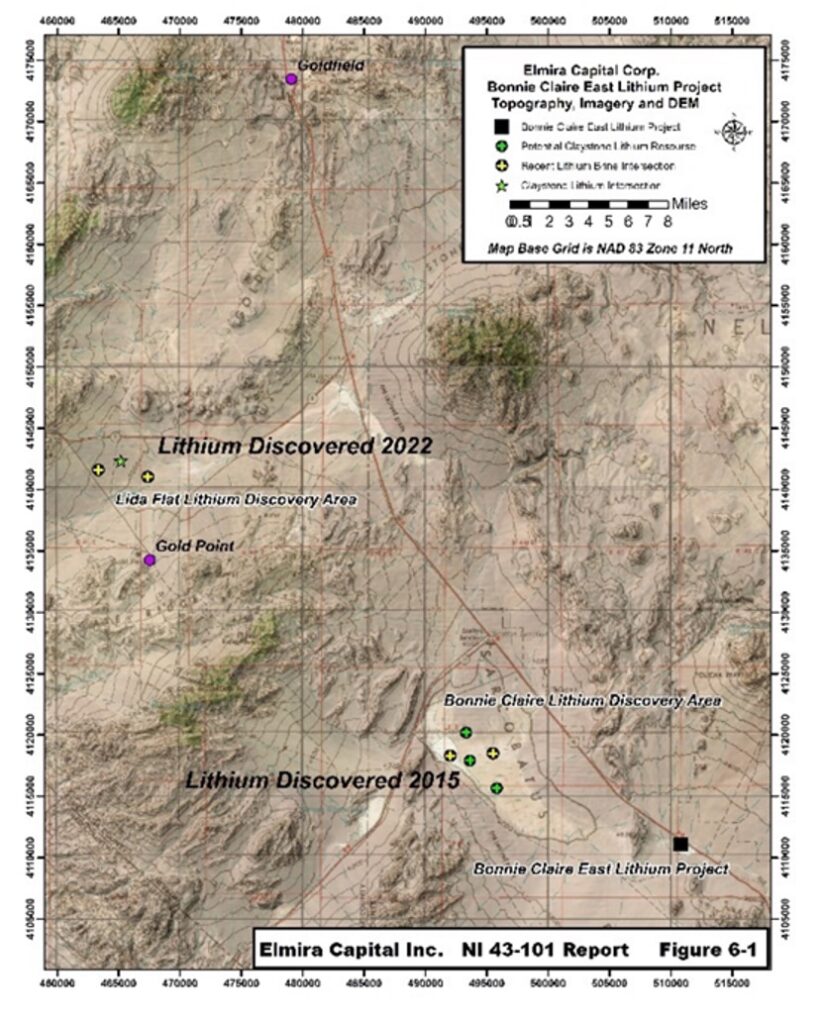
Lithium exploration in the region is expanding rapidly, with active drilling at Bonnie Claire (Lithium Nevada) and Lida Flat (Nevada Sunrise Corp), both reporting lithium in brine and claystone.
Soil sampling in 2019 on Bonnie Claire East by Elmira US showed anomalous lithium (100-160 ppm) from 10 cm deep playa sediment samples.
This aligns with regional lithium trends, supported by NURE stream sediment data indicating higher lithium content trending southeast to northwest through and beyond the Nevada Project area.
Bonnie Claire East Geology
The Bonnie Claire East Lithium property is relatively small at approximately 447 acres but is well located along a distinct regional trend of lithium concentration contained within ash rich, basinal claystone sequences.
In the case of lithium brines, long term production in the region has occurred. Recent new discoveries of lithium in brine have occurred as close as 11 miles from the project. These brine discoveries are occurring in evaporative basin, volcanic ash rich, claystone and mudstone lithologic units below the water table. The Property lies at the SSE end of this developing lithium trend.
Despite the small size of the property, the location of the claims within a developing regional lithium district and trend presents an opportunity for the discovery of claystone or brine hosts lithium mineralization.